
Roofs Built to Withstand Coastal Storms
Shingle Roofing in Wilmington for homes facing hurricane-season wind uplift and accelerated granule loss from salt air
On Point Roofing Co installs and replaces asphalt shingle roofs across Wilmington and the surrounding Port City region, where hurricane-season conditions create failure modes not seen in inland North Carolina. Your roof faces 100-mph gusts during tropical storms and constant salt air exposure that strips protective granules from shingle surfaces faster than anywhere else in the state. Granule degradation and wind blow-off are the two most common shingle failures in this coastal market, which is why starter-strip installation and hip-and-ridge cap hand-sealing cannot be skipped—even when post-storm crews are rushing through neighborhoods.
Shingle roofing in coastal environments involves more than fastening asphalt panels to plywood decking. Proper starter-strip placement along eaves and rakes creates the first line of defense against wind uplift, while hand-sealing each hip and ridge cap prevents the blow-off that happens when adhesive strips alone face sustained tropical storm winds. These steps take additional time and are frequently skipped by contractors unfamiliar with Port City storm conditions, but they determine whether your roof survives the next hurricane season intact.
Request an on-site evaluation to review your current shingle condition and wind resistance requirements.
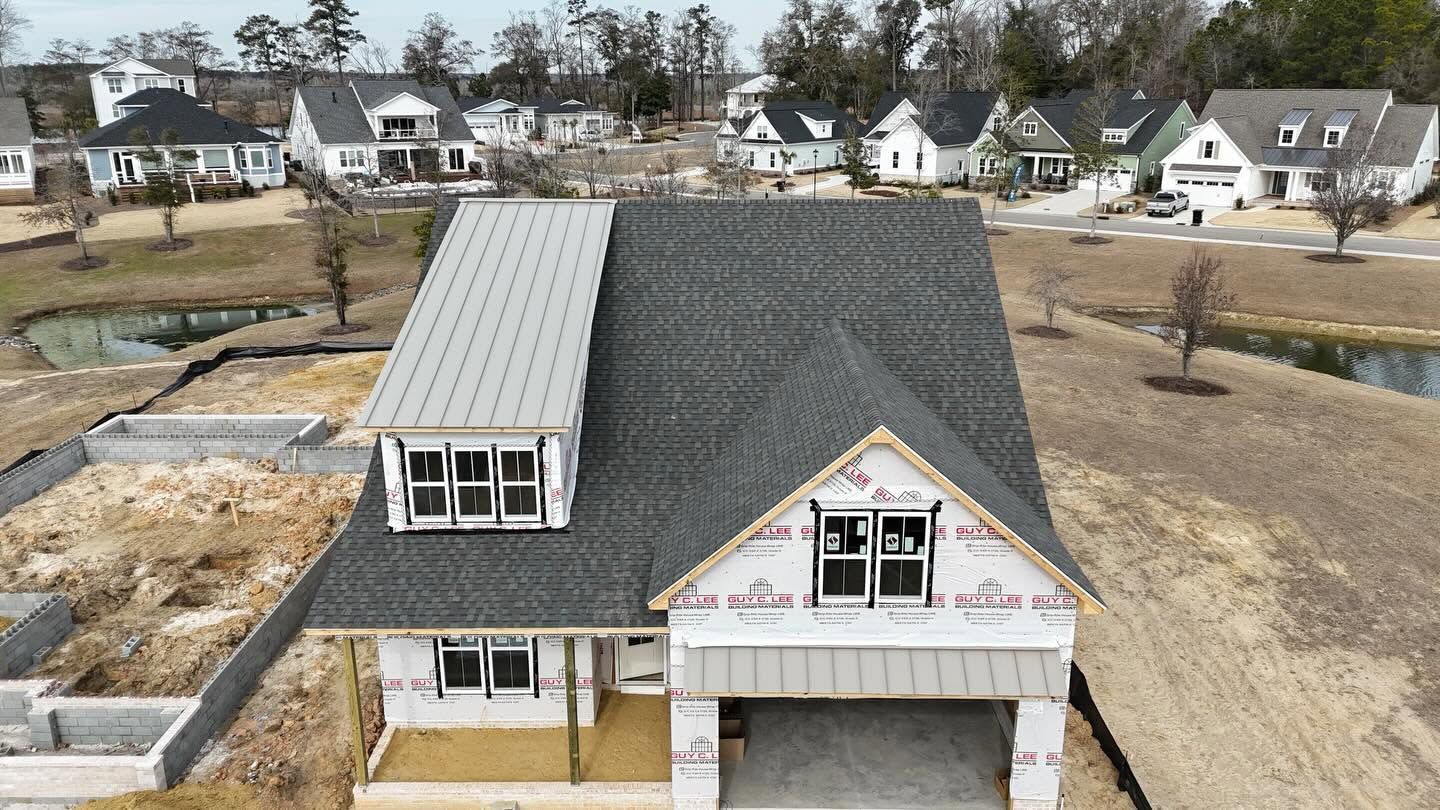
What Separates Coastal Shingle Installation from Inland Work
Architectural and impact-resistant asphalt shingles perform differently under salt air and high humidity than they do fifty miles inland. Granule coatings that protect the asphalt base layer from ultraviolet degradation deteriorate faster when salt particles settle on roof surfaces and hold moisture against the shingle. You will notice this as bare spots appearing on shingle surfaces within five to seven years rather than the ten to fifteen years typical for inland installations, and those bare spots signal that the underlying asphalt is now exposed to direct sun and moisture penetration.
After a shingle roof is installed with proper starter strips and hand-sealed ridge caps, your home is protected against wind uplift forces that would otherwise peel shingles back from eaves and ridges during sustained gusts. You will not see lifted shingle edges after storms, and you will not find shingle debris in your yard after a nor'easter passes through. The roof remains sealed along every edge and transition point where wind typically finds entry.
Shingle selection also depends on your specific exposure level—homes directly on the Intracoastal Waterway or near Carolina Beach face higher salt concentrations than properties in Ogden or Porters Neck. On Point Roofing Co evaluates your property's exposure and recommends shingle types rated for coastal wind zones, ensuring that material choice matches the conditions your roof will actually face rather than applying a standard inland approach to a coastal environment.
What Property Owners Usually Ask
Most homeowners in Wilmington have similar concerns when planning shingle roofing work, particularly about how coastal conditions affect material performance and installation methods.
What type of shingle works best for coastal Wilmington homes?
Architectural shingles with higher wind ratings and impact resistance perform better in Port City conditions than standard three-tab shingles, particularly when hand-sealing is applied to all exposed edges and ridge caps.
How long does a shingle roof last in salt air?
Granule loss accelerates under salt air exposure, so you should expect shingle roofs in Wilmington to show aging signs two to three years sooner than the manufacturer's rated lifespan, with proper installation extending durability as much as possible.
Why do shingles blow off after storms even when the roof looks new?
Blow-off typically happens when starter strips are omitted or when ridge caps rely only on factory adhesive strips rather than hand-sealing, both of which are shortcuts taken during high-volume post-storm work.
When should I replace my shingle roof rather than repair it?
If more than 30 percent of your roof surface shows granule loss or if multiple shingles have lifted along edges and ridges, replacement prevents the recurring leak cycle that starts once the asphalt base layer is exposed.
What happens during a shingle roof installation?
The process includes removing old shingles down to the deck, inspecting and repairing sheathing if needed, applying underlayment, installing starter strips along all edges, fastening shingles with proper nail placement for wind resistance, and hand-sealing all ridge and hip caps.
On Point Roofing Co brings coastal-market knowledge that inland contractors working post-storm do not carry, including an understanding of how salt air and tropical storm conditions affect shingle performance over time. Schedule a consultation to review your roof's current condition and discuss material options that match your property's exposure level.