
Low-Slope Systems That Handle Tropical Rain
Flat Roofing in Wilmington for commercial and residential properties that collect standing water after heavy rain events
Flat and low-slope roofs across Wilmington and Castle Hayne face drainage challenges that do not exist on pitched residential roofs, particularly after the tropical rain events that drop several inches of water in a single afternoon. On Point Roofing Co installs, repairs, and maintains flat roofing systems on commercial buildings and low-slope residential properties where ponding water creates premature membrane failure if drainage slope and internal drain placement are not verified before material selection. Tropical rain volume in this climate exceeds the design assumptions used for inland flat roofing, which is why a one-size-fits-all membrane install fails within years rather than decades.
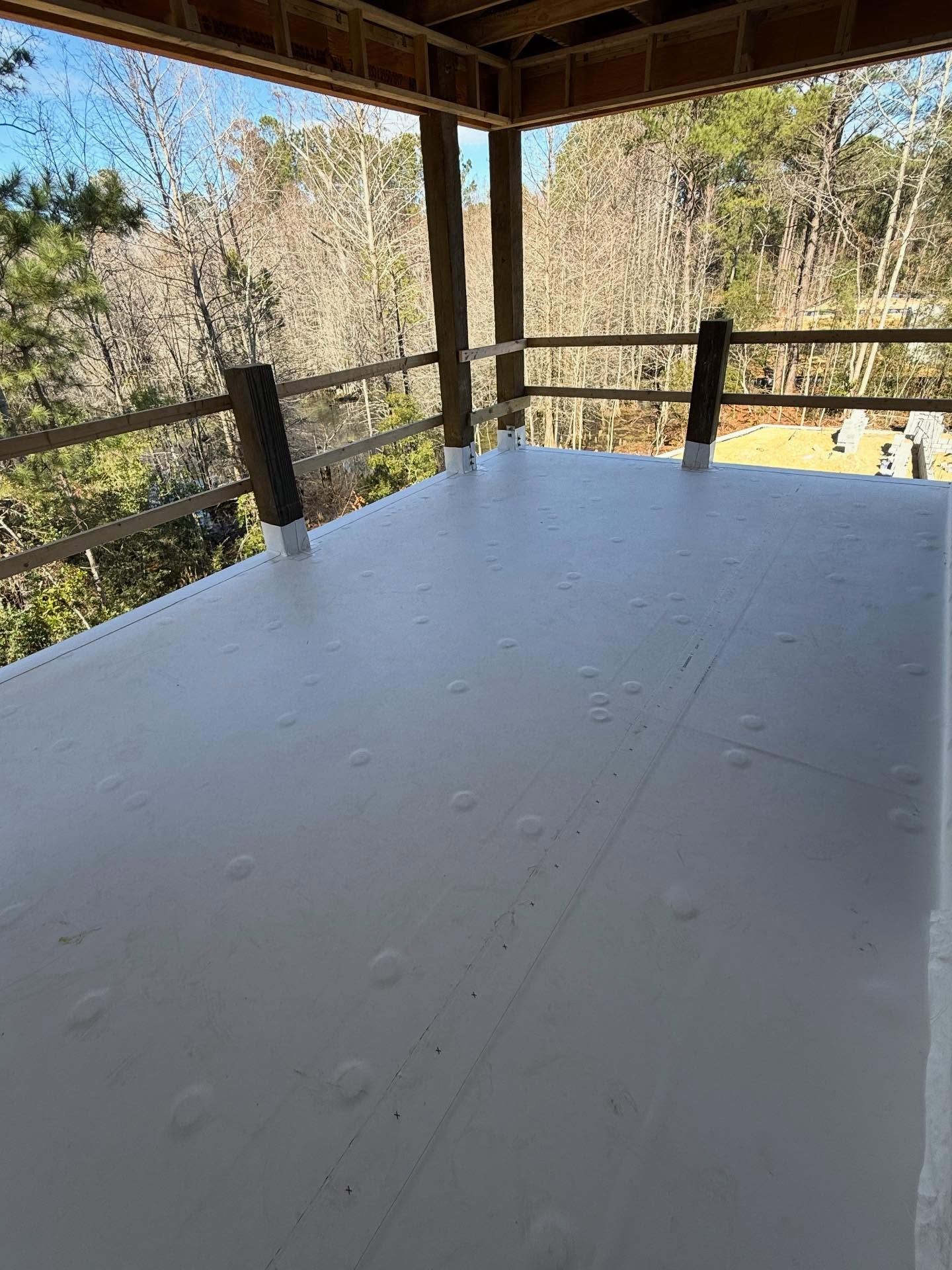
Flat roofing work begins with measuring existing drainage slope and identifying where water collects after rain, because ponding depth determines which membrane materials will survive and which will degrade under constant moisture exposure. Internal drains must be placed at true low points, and roof slope must direct water toward those drains without creating valleys where water sits for days. Verifying these conditions before a single membrane panel is rolled out prevents the recurring leak problems that result when material choice ignores actual site drainage.
Schedule a drainage assessment to identify ponding areas and review membrane options suited to your roof's slope.
How Drainage Affects Membrane Performance
TPO, EPDM, and modified bitumen membranes all handle standing water differently, and selecting the wrong material for your roof's drainage pattern shortens service life regardless of installation quality. TPO membranes resist ponding water better than EPDM in areas where drainage is marginal, while modified bitumen provides self-healing properties that help in high-traffic areas like rooftop HVAC service zones. The membrane must match not only your building type but also the specific ponding behavior observed on your roof after heavy rain.
After your flat roof is installed with correct slope and drain placement, water clears from the surface within hours rather than sitting in visible pools for days. You will not see sagging areas where membrane weight increases from trapped water, and you will not experience the interior leaks that start when ponded water eventually finds a seam or penetration. The roof remains dry between rain events, and the membrane maintains its flexibility rather than becoming brittle from constant moisture exposure.
Flat roofing also requires regular maintenance to clear drains and remove debris that blocks water flow, particularly after hurricanes and nor'easters deposit leaves and branches across
commercial rooftops. On Point Roofing Co provides maintenance plans that include drain cleaning and seam inspection, catching small problems before they become emergency leak calls during the next tropical storm.
Common Questions About This Service
Commercial property owners and homeowners with low-slope roofs in the Port City area often have similar concerns about drainage, membrane selection, and maintenance requirements.
What causes ponding water on flat roofs?
Ponding happens when roof slope is insufficient to move water toward drains, when drains are placed incorrectly, or when debris blocks water flow—all of which are common on older commercial buildings in Wilmington that were not designed for current tropical rain volumes.
How long does a flat roof membrane last?
TPO and EPDM membranes typically last 15 to 25 years depending on ponding exposure and maintenance, while modified bitumen systems last 10 to 20 years with proper care and timely repairs.
Why does my flat roof leak only after heavy rain?
Leaks that appear only during intense rain usually indicate that water is pooling in an area with a compromised seam or penetration, and the leak stops once the ponded water evaporates or drains away.
When should I repair versus replace a flat roof?
If membrane damage is localized to a small area and the rest of the roof shows no signs of widespread deterioration, repair is cost-effective—but if ponding has caused multiple seam failures or membrane brittleness across large sections, replacement is the only permanent solution.
What maintenance does a flat roof need?
Drains should be cleared quarterly and after every major storm, seams should be inspected annually for separation or lifting, and any ponding areas should be monitored to catch membrane degradation before leaks develop.
On Point Roofing Co diagnoses drainage first—before any material decisions are made—because understanding how water moves across your roof determines which membrane will perform and which will fail. Request a site visit to evaluate your current drainage pattern and discuss membrane options that match your building's specific conditions.